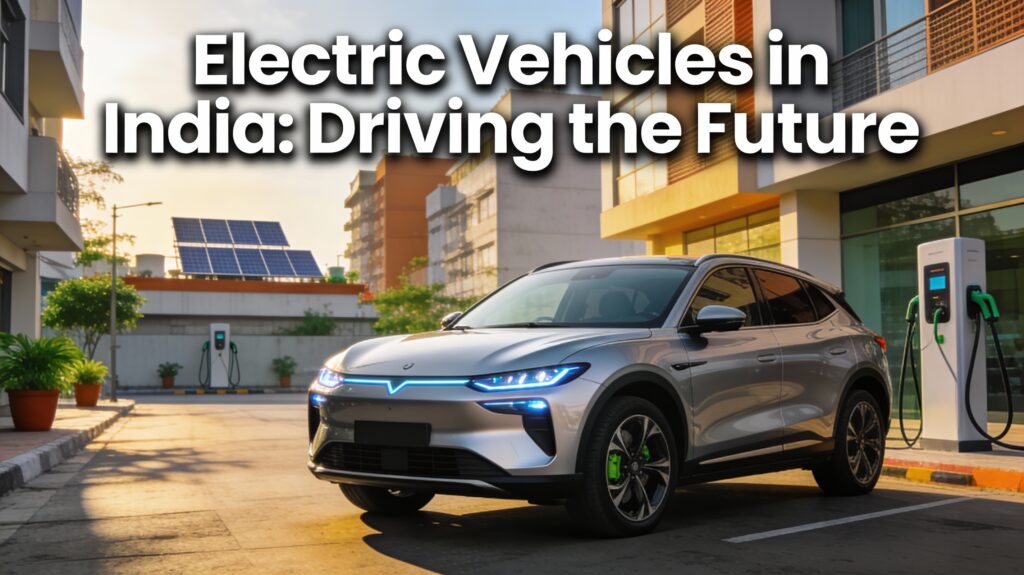
The Indian automobile industry is entering an exciting phase in 2026 with a focus on electric mobility, advanced technology, and sustainable transportation. Major automakers are launching multiple electric vehicle launches 2026 that promise to transform how Indians commute and experience driving.
Major EV and Car Launches Expected in January 2026
Several highly anticipated models are set to debut in the first month of 2026. Maruti Suzuki’s e Vitara marks the company’s first-ever all-electric offering, featuring battery options of 49 kWh and 61 kWh with a claimed range of approximately 500 kilometers. This Nexa-exclusive model includes an all-digital driver’s display, 10.1-inch touchscreen infotainment system, ventilated front seats, up to seven airbags, and Level-2 ADAS technology.
The Mahindra XUV 7XO (formerly XUV700 facelift) is launching in early January with fresh design touches, interior updates, and bookings already open at dealerships across India. Renault is bringing back the popular Duster nameplate on January 26, 2026, featuring an all-new exterior design, fresh interiors, and new engine options on the global K3 platform.
Nissan’s comeback strategy begins with the Gravite, a three-row sub-four-meter MPV sharing underpinnings with the Renault Duster. Powered by a 1.0-liter three-cylinder petrol engine paired with manual and AMT systems, the Gravite targets budget-conscious families seeking compact yet spacious vehicles
Industry Outlook and Price Adjustments
The overall industry outlook remains optimistic for 2026, with gradual demand recovery and expectations for GST rate reductions. However, major car manufacturers are implementing price increases of up to 3% in January 2026 to offset rising raw material costs and rupee depreciation. Popular models from brands like Nissan, Maruti Suzuki, Tata Motors, and Kia will be affected by these price revisions.
Revolutionary Car Technology Trends in 2026
Advanced Driver Assistance Systems (ADAS) are becoming standard in mid-range cars, with Level 2 or semi-autonomous driving systems helping drivers handle traffic and long highway journeys effortlessly. These features include adaptive cruise control, lane-keeping assist, blind-spot detection, and automatic emergency braking that significantly enhance road safety.
Artificial Intelligence is transforming the driving experience in 2026. AI-powered systems learn driving styles, recognize voices, suggest routes based on habits, and adjust seat positions and climate settings automatically. Some luxury models use AI-powered cameras to monitor driver attention levels and alert when drowsiness is detected.
Augmented Reality dashboards and head-up displays are replacing traditional meters, projecting key information like speed, directions, and warnings directly onto windshields. This sci-fi-like technology keeps drivers’ eyes on the road while accessing crucial driving data.
Electric Vehicle Adoption Accelerating in India
Despite India’s current EV penetration rate of approximately 2% compared to China’s 38% and Europe’s 21%, significant growth is expected in 2026. The challenge lies in consumer confidence rather than manufacturing capacity, with a critical “experience gap” preventing faster adoption.
Global electric vehicle sales reached a record 17 million units in 2024, increasing 25% year-over-year. The first quarter of 2025 saw an explosive 29% increase, indicating sustained momentum in electric vehicle launches 2026. Regulatory pressures, including the EU’s 2035 ban on internal combustion engine vehicles and China’s expanding EV mandates, are forcing automakers to accelerate innovation timelines.
Charging Infrastructure and Battery Innovations
Ultra-fast charging is gaining traction as networks scale to meet rising EV adoption. Ultra-fast systems delivering 350 kW or more are increasingly available, allowing compatible EVs to reach 80% charge in approximately 15-20 minutes. In the European Union, about 20% of ultra-fast chargers already deliver 350 kW or more, signaling mainstream adoption of high-power charging technology.
Solid-state batteries with improved efficiency and faster charging capabilities are anticipated in 2026. These next-generation batteries address the key concern slowing EV adoption: charging convenience and battery degradation issues.
Semiconductor Technology Driving Automotive Innovation
Semiconductors are enhancing vehicle safety by enabling faster decisions and reducing accident risks. Silicon carbide (SiC) semiconductors improve energy efficiency in high-voltage EV systems by reducing losses and enhancing thermal management. Gallium nitride (GaN) chips enable high-frequency switching, compact designs, and fast charging through efficient onboard charging systems.
The Road Ahead for Indian Automobile Industry
The convergence of policy frameworks and infrastructure development makes 2026 a breakthrough year for electric vehicle launches 2026 in India. Record 1.28 million electric two-wheelers were sold in 2025, indicating growing consumer acceptance of electric mobility. As India strives toward its 2030 green mobility goals, the transition depends on building consumer confidence through extended test-drive experiences and robust charging infrastructure.
Major manufacturers including Maruti Suzuki, Tata Motors, Mahindra, Kia, Renault, and Nissan are investing heavily in electric vehicle launches 2026, signaling their commitment to India’s electric future. With cleaner energy, lower running costs, and zero emissions, EVs represent the future of everyday driving for millions of Indians.